













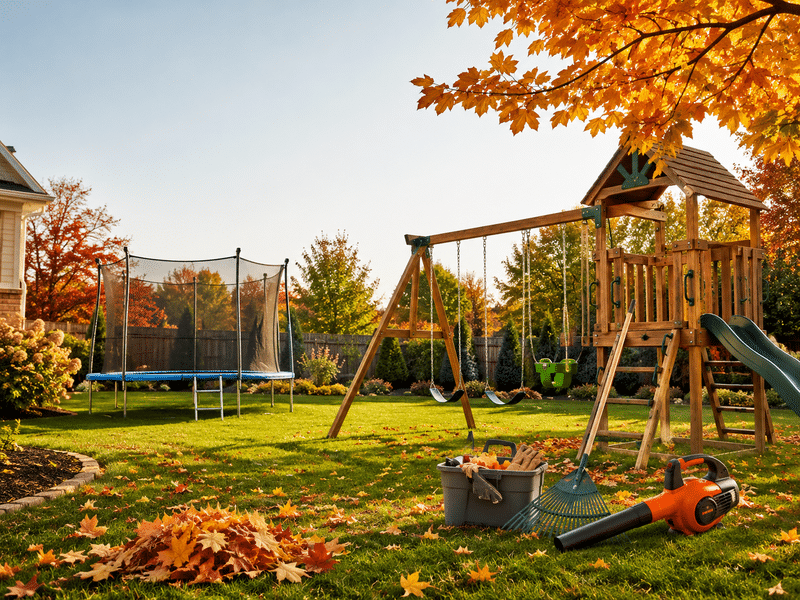
Fall is when your backyard quietly starts working against you. Rain soaks into wood joints. Leaves pile up in corners you can’t see. The first cold snap makes plastic brittle and hardware stiff. None of it looks dramatic in the moment, but by spring, that “nothing’s wrong” swing set can have a very different story to tell.
The good news: an hour or two of fall maintenance now can add years to your equipment and keep kids safer every time they run outside. Here’s a practical checklist for swing sets and trampolines, plus what to do before the temperature really drops.
What You’ll Learn in This Article
- Why fall weather is uniquely hard on backyard play equipment
- A full maintenance checklist for swing sets
- A full maintenance checklist for trampolines
- Whether you should take your trampoline down for winter
- Mistakes that quietly shorten the life of your equipment
- When to repair versus replace
Why Fall Maintenance Matters for Backyard Play Equipment
Seasonal Weather Speeds Up Wear
Moisture is the real enemy. It works into wood grain and starts rot before a soft spot is visible. Wet leaves piled against a frame trap that moisture even longer, which is exactly how mildew and rust get a foothold. Add colder temperatures, which make plastics and coated metals more brittle, plus wind or an early ice storm, and you’ve got a recipe for damage that didn’t need to happen.
Small Problems Turn Into Expensive Ones
A loose bolt doesn’t stay loose; every swing motion works it a little further out until it’s missing entirely. A small tear or worn component can also worsen with repeated use. ASTM’s current safety standard for home playground equipment includes requirements addressing structural integrity, installation, and maintenance reinforcing why regular inspections matter. Catching the small stuff now is far cheaper, and safer, than dealing with damaged equipment later.
Fall Swing Set Maintenance Checklist
Clean everything first. Clear leaves, dirt, and cobwebs, including under platforms and roofs. Wash plastic and coated metal with mild soap and water, and wipe down wood without soaking it.
Inspect the frame. Look for leaning posts or shifting footings. On wood, check for splinters, cracks, soft spots, rot, and insect damage. On metal, watch for rust, corrosion, bent tubing, and chipped coatings.
Tighten every bolt and connector. Snug anything loose without overtightening, and replace anything stripped or heavily rusted. Confirm bolt caps are still in place.
Check swings, chains, and ropes. Look for cracked or warped seats, rusted or separated chain links, and fraying rope. Test trapeze bars, rings, and climbing attachments.
Test slides, ladders, and railings. Confirm slides are firmly attached with no sharp edges, and check that ladder rungs and platform boards don’t move.
Seal or stain exposed wood. A weather-resistant sealant, applied to clean, dry wood, is one of the best investments before winter, just repair any damaged boards first.
Check the ground underneath. Look for exposed anchors, rocks, and roots, and top off mulch or safety surfacing wherever it’s thinned or shifted.
If your swing set is due for an upgrade instead of a repair, Happy Backyards’ swing set collection is worth a look before winter installation slots fill up.
Fall Trampoline Maintenance Checklist
Clear leaves and debris regularly. Sweep the mat and safety pad, and don’t let wet leaves sit they hold moisture right where you don’t want it.
Inspect the mat closely. Check for holes, tears, and thinning fabric, especially near the attachment points. If you find real damage, keep the trampoline off-limits until it’s fixed.
Check the springs and frame. Look for rust, stretched or missing hooks, and any bent or corroded frame sections. Tighten anything loose.
Examine the safety pad. It should fully cover the springs and frame with no torn fabric or compressed padding.
Check the net and poles. Look for holes or fraying in the enclosure net, test the zipper and fasteners, and make sure poles are straight and securely attached.
Secure it against wind. Follow the manufacturer’s anchoring guidance, inspect straps for wear, and take off any lightweight accessories that could blow away.
Need parts instead of a whole new trampoline? Browse Happy Backyards’ trampoline selection for compatible mats, pads, and nets.
Should You Take Down a Trampoline for Winter?
There’s no single right answer — it depends on your climate, wind exposure, typical snowfall, and available storage. A few options, from least to most involved:
- Leave it assembled and properly anchored
- Remove the net and safety pad for storage
- Take off the mat and springs as well
- Fully disassemble the frame
If you go the disassembly route, label parts as you go and keep hardware together in a sealed container — future-you will be grateful. Whatever you choose, never let heavy snow sit on the jumping surface; the weight can stress springs and the frame far beyond what they’re built for.
How to Prepare a Swing Set for Winter
Store fabric canopies, cushions, and removable toys somewhere dry. Double-check that the structure is anchored and stable, and give exposed wood and metal one more look for protection. Trim back branches that could come down in a storm, and walk the play area again after any major wind, ice, or snow event before letting kids back on it.
Fall Maintenance Mistakes to Avoid
- Covering damp equipment, which traps moisture instead of blocking it
- Ignoring small rust spots or loose hardware because they “aren’t that bad yet”
- Using harsh chemicals that strip protective finishes
- Sealing or staining wood before it’s fully dry
- Assuming anchors are still solid without actually checking
- Letting leaves or snow pile up on a trampoline surface
- Letting kids use equipment while repairs are still pending
When to Repair or Replace
Usually repairable: loose hardware, minor surface rust, small splinters, worn accessories, individual damaged springs, and replaceable pads or nets.
Usually a replacement conversation: extensive wood rot, cracked structural beams, severely corroded frames, bent load-bearing parts, large mat tears, or a structure that keeps moving despite proper anchoring. When in doubt, use manufacturer-approved parts and lean on Happy Backyards’ installation service for exactly these situations.
Frequently Asked Questions
How often should a swing set be inspected? A quick visual check throughout the season, plus a thorough inspection at each seasonal transition.
Can a wooden swing set stay outside all winter? Yes, if it’s properly sealed, well-anchored, draining correctly, and checked periodically.
Can a trampoline stay outside during winter? It depends on your climate, anchoring, expected snow load, condition, and manufacturer guidance.
Should I cover my trampoline in the fall? Only with a properly fitted cover, and only once the trampoline is clean and completely dry — covering damp equipment traps moisture.
How do I prevent a trampoline from blowing away? Use manufacturer-approved anchors or a tie-down system, choose a sheltered spot, and remove it entirely ahead of severe weather.
What’s the best way to protect a wooden swing set from moisture? Keep it clean, ensure water drains away from the base, fix small issues right away, and apply an exterior wood sealant before the wet season.
Keep Your Backyard Ready for Every Season
A little cleaning, inspecting, repairing, and securing now goes a long way toward a backyard that’s still safe and sturdy come spring. Get it done before the freezing weather arrives, and remember — if something’s damaged, it’s worth keeping off-limits until it’s actually fixed.
Need help choosing replacement parts or upgrading your backyard play area? Explore Happy Backyards’ swing sets, trampolines, and full product catalog or contact us with any questions.
Sources: U.S. Consumer Product Safety Commission, Public Playground Safety Handbook
HAPPY BACKYARDS – FRANKLIN | Collierville 📞 Phone: 615-595-5565 |
Hours: Monday – Saturday: 10:00 AM – 5:00 PM | Closed On Sunday


Subscribe to our FREE Newsletter