















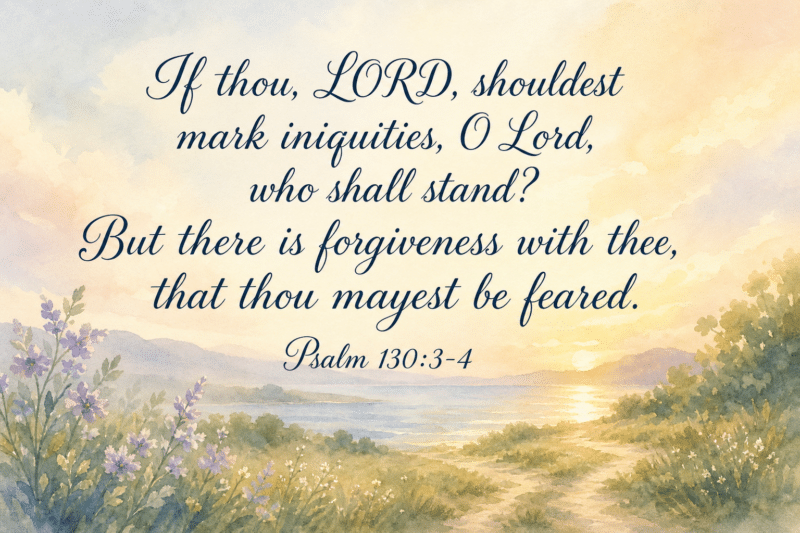
If thou, LORD, shouldest mark iniquities, O Lord, who shall stand? But there is forgiveness with thee, that thou mayest be feared.
Psalm 130:3-4 (KJV)
Understanding the Passage
Psalm 130 is a profound expression of hope and a deep longing for God’s mercy. In verses 3-4, the psalmist acknowledges the reality of human imperfection and sinfulness, asking, ‘If thou, LORD, shouldest mark iniquities, O Lord, who shall stand?’ This rhetorical question highlights the weight of our shortcomings and the necessity of divine grace. Thankfully, the second part of the passage offers a beautiful contrast: ‘But there is forgiveness with thee, that thou mayest be feared.’ Here, we see that even amidst our failures, God’s forgiving nature is a source of awe and reverence.
In this context, forgiveness is not merely the absence of punishment but rather an active expression of love and compassion. The psalmist recognizes that God’s willingness to forgive allows us to approach Him with humility and respect. This understanding of forgiveness invites us to reflect on our own lives, encouraging us to seek restoration in our relationships with both God and others.
Applying It Today
In our daily lives, we often grapple with feelings of guilt and shame over our mistakes. However, Psalm 130 reminds us that God does not hold our sins against us; instead, He offers forgiveness, which can be a transformative experience. Embracing forgiveness means acknowledging our shortcomings while also accepting God’s grace. This can lead us to forgive ourselves and extend forgiveness to those who may have wronged us, fostering healing and restoration in our relationships.
Consider how you can incorporate the spirit of forgiveness into your day-to-day interactions. Perhaps it starts with a small act of kindness to someone you’ve held a grudge against or allowing yourself the grace to move past a mistake. As we embody forgiveness in our lives, we reflect God’s love to those around us and contribute to a more compassionate community. Remember, forgiveness is a gift that not only frees us but also strengthens our connections with others.
Reflection Questions
- What does forgiveness mean to you personally?
- Are there areas in your life where you struggle to forgive yourself?
- How can you actively practice forgiveness in your relationships?
- What steps can you take to remind yourself of God’s forgiveness?
- In what ways can you show grace to others today?
Prayer
Dear Lord, thank you for your abundant forgiveness and mercy. Help us to embrace your grace in our lives and to extend that same forgiveness to others. May we reflect your love and compassion in all that we do. Amen.
Closing Thought
As we navigate our lives, let us always remember the power of forgiveness. It not only brings us closer to God but also allows us to build stronger, more loving relationships with those around us.


Subscribe to our FREE Newsletter