
















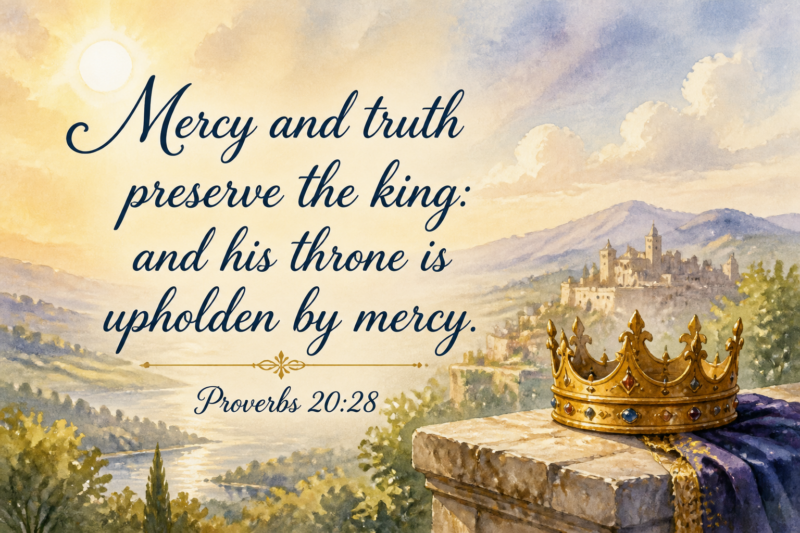
Mercy and truth preserve the king: and his throne is upholden by mercy.
Proverbs 20:28 (KJV)
Understanding the Passage
In Proverbs 20:28, we find a profound insight into the qualities that sustain effective leadership. The verse highlights two key elements—mercy and truth—suggesting that these virtues are fundamental to a leader's ability to maintain authority and stability. The imagery of a king's throne being upheld by mercy paints a picture of leadership that is compassionate and just, rather than one that relies solely on power or control. This suggests that lasting leadership is not just about making decisions but about fostering an environment of trust and care.
In the context of the Old Testament, kings were seen as representatives of God’s authority on earth, and their actions had a significant impact on the people they governed. By emphasizing mercy and truth, this verse implies that leaders—even today—should strive to serve their communities with humility and integrity. It reminds us that the best leaders act with a sense of responsibility towards those they lead, reflecting the values of love and honesty in their decisions.
Applying It Today
As we reflect on Proverbs 20:28, we can each consider how we apply mercy and truth in our own lives, regardless of our formal leadership roles. In our families, workplaces, or communities, embodying these qualities can lead to stronger relationships and a sense of unity. When we choose to act with mercy, we acknowledge the humanity in others, understanding that everyone makes mistakes and deserves forgiveness. Truth, on the other hand, fosters transparency and builds trust, essential elements in any relationship.
Whether we are guiding a team at work, nurturing our children, or volunteering in our community, we can ask ourselves how we can lead with these principles in mind. Engaging in open conversations, listening actively, and showing compassion can transform our interactions. By integrating mercy and truth into our daily actions, we set a positive example that encourages others to do the same, creating a ripple effect of good within our circles.
Reflection Questions
- How can I show mercy to someone in my life today?
- In what ways can I incorporate truthfulness into my leadership style?
- Who can I model mercy and truth for in my community?
- What are some challenges I face in being a merciful leader?
- How does truth influence my relationships with others?
Prayer
Dear God, help me to embody mercy and truth in my life and leadership. May my actions reflect compassion and integrity, fostering strong and trusting relationships with those around me. Amen.
Closing Thought
As we strive to lead in our various roles, let us remember that true leadership is rooted in mercy and truth. By embracing these virtues, we can uplift those we guide and create a more harmonious community.


Subscribe to our FREE Newsletter