
















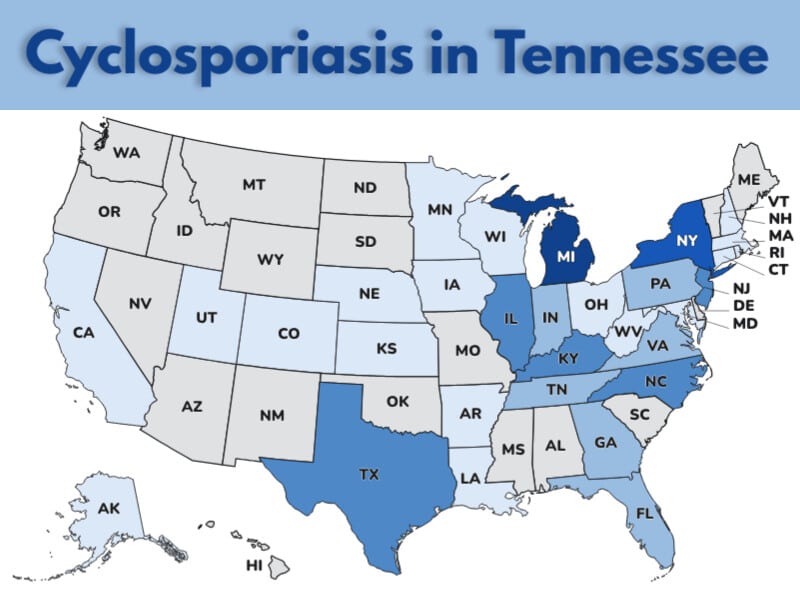
Tennessee is seeing a growing number of Cyclosporiasis infections this summer, with between 11 and 30 cases reported in the state as health investigators work to determine what is making people sick.
The illness is part of a larger increase being reported across the country. Since May 1, the Centers for Disease Control and Prevention has confirmed 843 cases of cyclosporiasis in 31 states and is reviewing more than 1,500 additional reports that could push that number significantly higher.
Cyclosporiasis is caused by the microscopic parasite Cyclospora and is typically linked to contaminated food or water. State and federal health agencies are currently investigating several outbreaks, but no common source has been identified.
The CDC says cases have risen sharply in recent weeks, with multiple states reporting more illnesses than they saw during the same period in 2025. Because reporting can lag by several weeks, health experts expect the number of cases to continue climbing.
So far this year, 86 people across the country have been hospitalized with the illness, though no deaths have been reported. Most infections occur during the warmer months, with Cyclosporiasis season generally running from May through the end of August.
Symptoms can include watery diarrhea, loss of appetite, weight loss and other stomach-related problems. Anyone experiencing symptoms is encouraged to contact a healthcare provider for testing and treatment.
Health experts say the best way to reduce the risk of cyclosporiasis is to avoid food or water that could be contaminated with feces. The CDC recommends washing hands with soap and water before and after handling fresh produce and thoroughly rinsing fruits and vegetables under running water before eating, cutting or cooking them. Produce labeled as prewashed does not need to be washed again, while firm fruits and vegetables such as melons and cucumbers should be scrubbed with a clean produce brush. Any damaged or bruised areas should also be removed before eating.
Cyclospora outbreaks in the United States have previously been linked to produce including raspberries, basil, cilantro, snow peas and mesclun lettuce. However, health experts warn that because Cyclospora can be difficult to remove, washing produce alone may not eliminate the parasite.
The CDC continues to work with state health departments and federal partners to trace the source of the outbreaks and determine whether the cases are connected.


Subscribe to our FREE Newsletter